The Unprotected

There is one paragraph in Steven Brill’s essay in Time on what’s wrong with the United States that can’t be emphasized often enough:

As I tried to find the answer over the past two years, I discovered a recurring irony. About five decades ago, the core values that make America great began to bring America down. The First Amendment became a tool for the wealthy to put a thumb on the scales of democracy. America’s rightly celebrated dedication to due process was used as an instrument to block government from enforcing job-safety rules, holding corporate criminals accountable and otherwise protecting the unprotected. Election reforms meant to enhance democracy wound up undercutting democracy. Ingenious financial and legal engineering turned our economy from an engine of long-term growth and shared prosperity into a casino with only a few big winners.

These distinctly American ideas became the often unintended instruments for splitting the country into two classes: the protected and the unprotected. The protected overmatched, overran and paralyzed the government. The unprotected were left even further behind. And in many cases, the work was done by a generation of smart, hungry strivers who benefited from one of the most American values of all: meritocracy.

The emphasis is mine. In the balance of the piece, Mr. Brill insistently points his finger in the wrong direction. Rather than arguing over who shot John let’s just think about the obvious. If the problem is that the American people have been divided into a relatively small protected (and I would say subsidized class) and a much larger unprotected class, isn’t the solution obvious? There are two possible directions: protect everybody or protect nobody.

Protecting everybody would mean imposing tariffs, transforming “at will” employment into unrecognizability, broadening American subsidization of businesses, creating mechanisms to ensure that everyone who wants a job has one, and generally reconstructing all of the U. S. economy and society to more closely resemble the societies and economies of Europe. Protecting no one would mean rolling back occupational licensing, removing restrictions on foreign competition with presently protected businesses and individuals, restoring intellectual property law to something that more closely resembles what it was 200 hundred years ago, and the thicket of subsidies that has grown up over the years would be eliminated.

IMO the latter would, from a technical standpoint, be much easier than the former. It would also mean an end to the benefits presently enjoyed by the protected who will fight the reforms to the death and who have the power to get what they want.

My bet is that neither will be done and over time the United States will come to resemble Mexico with its small, wealthy, entrenched mostly Spanish aristocracy and its large struggling mostly native and mestizo lower class.
0 comments

Treadmill, Expression of Sincere Opinion, or Racket?

I enjoyed reading the essay by Coleman Hughes at Quillette, “The Racism Treadmill”. Here’s a snippet:

In his controversial bestseller Enlightenment Now, Harvard psychologist Steven Pinker notes a steep decline in racism. At the turn of the 20th century, lynchings occurred at a rate of three per week. Now, racially-motivated killings of blacks occur at a rate of zero to one per year.1 What’s more, racist attitudes that were once commonplace have now become fringe. A Gallup poll found that only 4 percent of Americans approved of marriages between blacks and whites in 1958. By 2013, that number had climbed to 87 percent, prompting pollsters to call it “one of the largest shifts of public opinion in Gallup history.”

Why can’t progressives admit that we’ve made progress? Pinker’s answer for what he dubs “progressophobia” is two-fold. First, our intuitions about whether trends have increased or decreased are shaped by what we can easily recall—news items, shocking events, personal experience, etc. Second, we are more sensitive to negative stimuli than we are to positive ones. These two bugs of human psychology—called the availability bias and the negativity bias, respectively—make us prone to doomsaying, inclined to mistake freak news events for trends, and blind to the slow march of progress.

But while psychological biases may sufficiently explain progressophobia on most other topics, our denialism about racial progress calls for a deeper explanation—an explanation in terms of widely-held beliefs about race and inequality.

I find myself without much to say about it other than a) Oh, to be young again! and b) I guess that stirring up a hornet’s nest is the way to get yourself noticed these days.

On the subject of racism I think that anti-black racism is real and it’s holding black people back in many ways. So is the counter-reaction to it. For the last century there’s been an ongoing debate between Booker T. Washington and Marcus Garvey. Garvey seems to have the upper hand now. Sadly, importing tens of millions of Mexican workers has rendered the persistent problem of anti-black racism intractable.

5 comments

Some Quotes on the Israeli-Palestinian Disaster

I do not have a solution to the conflict between the Israelis and Palestinians. That has baffled better minds than mine. I don’t think as my friend John Burgess did that it can be solved by paying the Palestinians to give up the so-called “right of return”.

I wanted to give you a few quotes on the subject to chew on. The first is from Moshe Dayan from an address published in 1969 by Ha’aretz:

We came to this country which was already populated by Arabs, and we are establishing a Hebrew, that is a Jewish state here. In considerable areas of the country we bought lands from the Arabs. Jewish villages were built in the place of Arab villages. You do not even know the names of these Arab villages, and I do not blame you, because these geography books no longer exist; not only do the books not exist, the Arab villages are not there either. Nahalal arose in the place of Mahalul, Gevat — in the place of Jibta, Sarid — in the place of Haneifs and Kefar Yehoshua — in the place of Tell Shaman. There is no one place built in this country that did not have a former Arab population.

The second is from Abdulaziz, founder of the modern Saudi state, from the first meeting between a Saudi head of state and an American:

After discussing the progress of the war, and expressing his confidence that Germany would be defeated, F.D.R. stated that he had a serious problem in which he desired the King’s advice and help; namely, the rescue and rehabilitation of the remnant of Jews in Central Europe who had suffered indescribable horrors at the hands of the Nazis: eviction, destruction of their homes, torture and mass-murder. He, F.D.R., felt a personal responsibility and indeed had committed himself to help solve this problem. What could the King suggest?

Ibn Saud’s reply was prompt and laconic: “Give them and their descendants the choicest lands and homes of the Germans who had oppressed them.” F.D.R. replied that the Jewish survivors have a sentimental desire to settle in Palestine and, quite understandably, would dread remaining in Germany where they might suffer again.

The King said that he had no doubt the Jews have good reason not to trust the Germans, but surely the Allies will destroy Nazi power forever and in their victory will be strong enough to protect Nazi victims. If the Allies do not expect firmly to control future German policy, why fight this costly war? He, Ibn Saud, could not conceive of leaving an enemy in a position to strike back after defeat.

In a few minutes, F.D.R. returned to the attack, saying that he counted on Arab hospitality and on the King’s help in solving the problem of Zionism, but the King repeated: “Make the enemy and the oppressor pay; that is how we Arabs wage war. Amends should be made by the criminal, not by the innocent bystander. What injury have Arabs done to the Jews of Europe? It is the ‘Christian’ Germans who stole their homes and lives. Let the Germans pay.” Once more, F.D.R. returned to the subject, complaining that the King had not helped him at all with his problem, but the King, having lost some patience, did not expound his views again, beyond stating (with a note of rony in his voice) that this over-solicitude for the Germans was incomprehensible to an uneducated bedouin with whom friends get more consideration than enemies. The King’s final remark on the subject was to the effect that it is Arab custom to distribute survivors and victims of battle among the victorious tribes in accordance with their number and their supplies of food and water. In the Allied camp there are fifty countries, among whom Palestine is small, land-poor and has already been assigned more than its quota of European refugees.

I encourage you to read the entirety of the monograph from which that passage was taken. I’ve linked to it before; it’s a fantastic primary source.

The third is from Harry Truman (same source):

Finally, Mr. Truman summed up his position with the utmost candor: “I’m sorry, gentlemen, but I have to answer to hundreds of thousands who are anxious for the success of Zionism; I do not have hundreds of thousands of Arabs among my constituents.

I am very sensitive to the charge of anti-Semitism. Some of my favorite relatives are Jewish. If anything I’m Semophilic. I am, however, skeptical that the U. S. should give full-throated support to a state in the Middle East insistent on maintaining its Jewishness (or being an Islamic state, for that matter). I don’t think we should support religious states at all.

7 comments

Breaking Up Is Hard to Do

Here’s a link to a podcast at Atlantic on breaking up Amazon on anti-trust grounds.

That wouldn’t be my first choice. That would be for Amazon to break Amazon up on business grounds. I have a question for people who are more stock-savvy than I (which includes almost everyone). Can Amazon’s valuation be rationalized? Can its revenues ever justify its stock price? I have the same question about Facebook.

1 comment

Dump the Sugar Subsidy

I’m glad the editors of the Wall Street Journal have gotten on board eliminating the sugar subsidy:

Cognitive dissonance is common in Washington, but some cases truly are exceptional. One is the ritual of the farm bill, when Republicans who campaign on “free markets” whoop through corporate welfare for agriculture interests. But maybe there’s a stroke of sense coming on sugar subsidies.

Republican Rep. Virginia Foxx of North Carolina is making a run at reforming the U.S. sugar program with an amendment to the farm bill that may hit the House floor as soon as this week. This program is arguably the worst farm subsidy, which is saying something, featuring a menagerie of sweetened loans, restrictions on sales and import quotas for some of America’s richest people.

The point is to keep prices artificially high and enrich large sugar producers, who aren’t paupers but nonetheless demand this help to maintain their station. Many producers live in Florida, which is why Senator Marco Rubio periodically embarrasses himself by supporting sugar welfare.

All of this is a tax on consumers. In 2015 raw sugar in the U.S. ran 24.7 cents a pound, an 84% premium over the global price. Consumers lose anywhere from $2.4 to $4 billion annually, according to an analysis from the American Enterprise Institute.

Perhaps the worst result of the program is how the effects ripple across the supply chain and kill jobs. The program drives manufacturing jobs overseas—hello there, President Trump —where sugar inputs are cheaper.

Take Ford Gum & Machine Company, the last major manufacturer of gum balls in the United States. The president of the firm has said he could double his workforce, based in Akron, N.Y., if he could pay fair market prices for sugar.

Ms. Foxx’s proposal wouldn’t eliminate the program but would curb some of its worst features, such as repealing “marketing allotments,” which are restrictions on sales. Another is ending a program that allows the Agriculture Department to buy surplus sugar and sell it to ethanol companies at a loss.

The agriculture lobby is treating the mere mention of reform as a surprise land invasion, and the politics are splitting Republicans. But this should be an easy yes for progressives who harp about corporate welfare in theory but too often vote for it in practice, and the amendment could win with a cross-party coalition.

Republicans are struggling to get the votes for their bill, in part because they have added a modest work requirement for food stamps, which eat up about 80% of farm bill dollars. This is a worthy policy change, but Republicans would have more credibility on reforming welfare for people if they did the same for politically powerful agribusiness.

We have a lot of bone-headed, counter-productive, uneconomical policies but the sugar subsidy, a Cold War relic, is one of the worst. Not only does it cost jobs, make U. S.-made products uncompetitive internationally, and raise prices for consumers, it’s environmentally damaging. We should have eliminated it 30 years ago. Carpe diem.

1 comment

Homeless in Seattle

In his latest op-ed in the Washington Post policy scholar Jared Bernstein wades into Seattle’s controversial head tax for “large” businesses with a disappointing offering. He gets off on the wrong foot with this right at the beginning:

Let’s talk about this “head tax” on large businesses — those with gross revenue above $20 million — that the Seattle City Council unanimously passed this week to help deal with the city’s worsening homelessness problem.

$20 million in gross revenues doesn’t necessarily indicate a large business. It almost certainly indicates a small one. According to the standards used by the Small Business Administration, what constitutes a small business varies by sector. A $20 million construction company, supermarket, or used car dealer is a small company. And companies over the SBA’s standards for small companies aren’t large companies. They’re medium-sized companies.

Here’s a handy rule of thumb. A company under $100 million in gross annual revenues is a small company. A company from $100 to $1 billion in revenues is a medium-sized company. Over a billion is a large company. In other words the Seattle head tax is a tax on most businesses, affecting all but the smallest businesses, mom and pop shops.

Let’s continue. He then tries to articulate a case for special taxes on Seattle businesses to pay to ameliorate the problem of homelessness:

These companies are better known for putting their hands out for tax breaks in exchange for the added economic activity they bring to the places where they locate.

As stated that’s irrelevant. Dr. Bernstein makes no case that the businesses in Seattle on which the tax is being levied including Amazon have been the beneficiaries of such tax breaks. Was Amazon lured to Seattle? Or was it started in Seattle because Jeff Bezos had decided to move from New York to Seattle?

This is relevant:

But while such activity is welcomed by many, it also creates greater demand for public services, for schools, police, infrastructure, maintenance, etc. It also raises housing prices in these areas.

but the case would be much better if the threshold for the tax was $100 million rather than $20 million. I suspect that a downtown Burger King franchise is a $20 million business but it probably isn’t attracting people to move from New York to Seattle and, consequently, increasing housing prices.

He then handwaves around first one potential solution to the problem:

So far, I’ve heard two ideas offered as alternatives to the tax. First, in a debate on CNBC Tuesday, Jimmy Pethokoukis argued that if the city would just revamp its restrictive zoning laws, more affordable housing would be built. I don’t doubt that claim, and Seattle is one of many cities wherein housing costs are inflated by such restrictions. But that’s just not a workable solution to Seattle’s real-time homelessness problem. Those zoning debates go on forever, and even in the unlikely event that restrictions were quickly loosened, it would be years before there was enough affordable housing to make a difference.

Just as zoning debates may go on forever, so do tax debates. Is that a reason for dismissing it? Additionally, the tax won’t generate revenue immediately. The litigation over it will go on for years.

And then he handwaves around the other:

Second, I heard Amazon reps argue that Seattle inefficiently spends its current revenue take. The city doesn’t need more revenue; it just needs to do a better job with what it’s got. Sitting here in the other Washington, I won’t presume to be able to evaluate this claim. But it does sound uncomfortably close to the “just cut out the waste, fraud, and abuse!” admonition one hears all too often in budget discussions, as if there’s a budget line for those items that no one ever thought of cutting.

In other words neither of us know whether reordering of Seattle’s spending priorities would result in funds immediately becoming available to devote to the problem of homelessness.

Unmentioned in the op-ed: Seattle has also imposed a $15 minimum wage. One would think that would reduce the number of jobs businesses are likely to create which might make the poor more able to afford Seattle’s high rents.

But that gets to the next problem. Homelessness isn’t monolithic. People are homeless for a variety of reasons. Some are temporarily homeless for economic reasons, some have mental disorders, some have substance abuse problems, and for some it’s a lifestyle choice. According to this report, 40% of Seattle’s homeless are people with disabilities compared with 16% of the population, something between 13% and 35% have substance abuse problems, 40% are working and would move off the streets if they had the money, and for 7% it’s a lifestyle choice. There’s no word on which segment is increasing the most rapidly. The 40% sounds like the group whose problems are easiest to tackle.

Here’s my proposal. Raise the threshold for the tax to $200 million, use the proceeds for rent subsidies, and eliminate the $15 minimum wage. That won’t solve Amazon’s problem but it might help to ameliorate the problem of homelessness in Seattle.

1 comment

The 9.9%

I wanted to draw your attention to an article by Matthew Stewart in the Atlantic, remarking on the development and divergence of the 9.9%:

By any sociological or financial measure, it’s good to be us. It’s even better to be our kids. In our health, family life, friendship networks, and level of education, not to mention money, we are crushing the competition below. But we do have a blind spot, and it is located right in the center of the mirror: We seem to be the last to notice just how rapidly we’ve morphed, or what we’ve morphed into.

The meritocratic class has mastered the old trick of consolidating wealth and passing privilege along at the expense of other people’s children. We are not innocent bystanders to the growing concentration of wealth in our time. We are the principal accomplices in a process that is slowly strangling the economy, destabilizing American politics, and eroding democracy. Our delusions of merit now prevent us from recognizing the nature of the problem that our emergence as a class represents. We tend to think that the victims of our success are just the people excluded from the club. But history shows quite clearly that, in the kind of game we’re playing, everybody loses badly in the end.

Read the whole thing. Those of you who are regular readers here may notice that this is a subject to which I’ve returned a number of times. I’m much more concerned about the allegedly meritocratic 9.9% than I am about the .1%.

Bill Gates is the son of a physician as is Mark Zuckerberg; Jeff Bezos’s father owned a bicycle shop (his mom’s second husband was an engineer). None of them were part of the old plutocratic aristocracy but grew up among the 9.9%. We’re always going to have those ultra-rich high-achievers with us. There are only a small number of them. If I were king, there’d be a lot more downwards mobility; the barriers, not just economic but social, to the high-achievers leaving their offspring enough money to be idle should be formidable. But that’s a different subject.

What concerns me is the 9.9%. As documented by Mr. Stewart we control 60% of the wealth and an enormous proportion of the total national income and they’re highly dependent on subsidies. When you combine that wealth and dependence on government with a possibly realistic sense of entitlement and assortative mating it’s deadly to the sort of egalitarian society I’d like to live in and which has been more the norm in American life.

That’s not the only danger we pose. What if Schumpeter was right? Joseph Schumpeter was an early 20th century economist. He coined the phrase “creative destruction” to describe the effects of the capitalist system. One of his most famous claims was that the “intellectual class”, which is what the 9.9% is, would destroy the capitalist system that brought it into being. That’s not a prospect that I think any of us should relish.

9 comments

Clipping Coupons

In a comment on one of the posts I noticed the phrase “clipping coupons” and it amused me just how much the phrase has changed over the years. Now it refers to someone who clips coupons from a flyer or newspaper to get discounts on products. It’s a sign of frugality. But that wasn’t always its meaning.

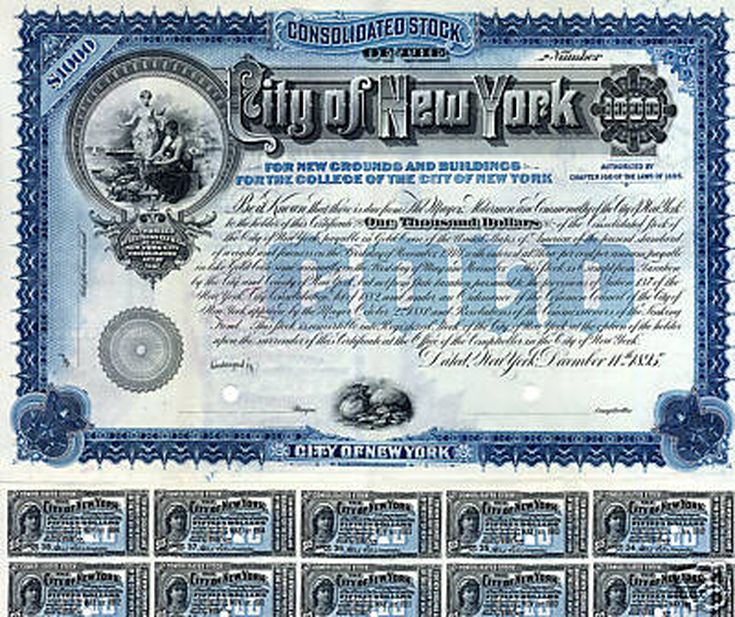
Once upon a time when you bought a bearer bond the actual bond certificate came with “coupons” attached. See the illustration above, a bond with coupons attached. To redeem the biannual interest payments, you’d clip the appropriate coupon from the bond and take it into an authorized agent bank. That was something associated with the idle rich.

Making your living by clipping coupons has gone from a derisive comment about the rich to a remark about the frugal poor or middle class in just under a century.

2 comments

Seattle Wants Less Employment

I make a general policy of refraining from comment about the political doings of states and localities other than my own but I thought this was sufficiently extraordinary that it deserved note. While you read it, keep in mind the truism that when you tax something, less of it will be produced than otherwise would. The editors of the Wall Street Journal chide the Seattle city council for imposing a tax on large employers:

Seattle’s city council on Monday unanimously approved a $250 “tax” per full-time employee on businesses with more than $20 million in annual revenue. Progressive council members had originally proposed a $500 jobs tax that would have turned into a 0.7% payroll tax in 2021, but then Seattle’s businesses revolted.

Amazon suspended two building expansion projects. More than 100 large businesses including Expedia , Alaska Airlines and Redbox wrote a letter warning that the tax sends the message “to every business: if you are investing in growth, if you create too many jobs in Seattle, you will be punished,” which “will cause far greater damage to Seattle’s growth prospects than the direct impact on the businesses being taxed.”

Three hundred or so small businesses also warned that “continuing tax increases and regulations will only hurt the small business community and will vastly change our city.” Even trade unions begged the council “not to tax our jobs away.”

After the council scaled back the head tax, Amazon said it plans to resume work on one of its expansion projects, but a spokesperson noted that “we remain very apprehensive about the future created by the council’s hostile approach and rhetoric toward larger businesses, which forces us to question our growth here.”

The head tax is merely the city council’s latest depredation against business. In 2015 the council allowed Uber drivers, who are independent contractors, to collectively bargain. A Ninth Circuit Court of Appeals panel on Friday declared that the ordinance violates antitrust laws. The council last year imposed a 2.25% income tax on high earners, which a state court has blocked.

Many businesses have located and expanded in Seattle because Washington state doesn’t impose an income tax. Last year Washington’s GDP growth led the country at 4.4%. But Seattle’s city council seems to think this growth will continue no matter what it does. Ask Connecticut how that turns out.

If they could figure out how to impose a tax on homelessness, they’d really be getting somewhere. Or regulations. Meanwhile, Seattle’s unemployment rate is slightly higher than the national average so I guess they have some headroom for reducing employment.

But things can change very rapidly. Note that Microsoft isn’t subject to the tax—it’s not in Seattle but in Redmond just a few miles away. I imagine large Seattle companies will notice the same thing.

23 comments

There Will Be More

There will be more of this. From a Washington Post column by David Von Drehle:

Across the United States, online education is booming. Sixth-through-12th-graders enrolled in Florida’s largest full-time virtual high school completed more than 44,000 semesters of classwork last year. In Kansas, virtual school enrollment grew 100-fold between 1999 and 2014, from about 60 students to more than 6,000.

Perhaps inevitably, controversy has followed the growth. Some educators worry that online schools are inherently inferior to traditional classrooms with their flesh-and-blood teachers and peer-group teamwork. I agree that the trend requires close monitoring; at this point, quality research is still sparse. But one widely cited study for Harvard’s Kennedy School of Government found that a well-run virtual school can match outcomes of brick-and-mortar institutions.

To Jody Siebenmorgen, director of the Humboldt virtual high school, comparing her program with traditional schools misses the crucial fact. Her students have tried the old model, and it didn’t work for them. “A lot of my students were expelled from their local schools, and neighboring schools won’t take them,” she told me. “I work with 14 different probation officers. I also work with some gifted students who are bored stiff in their schools and just want to finish quickly and move on to greater challenges. I work with students in foster care. I work with a lot of teen moms juggling school and child care. I work with students who are battling illnesses that prevent them from going to school. I once had a student who received a double lung transplant, and she attended high school on a laptop in bed at Children’s Mercy Hospital.”

Real spending on education is increasing far faster than just about anything else (other than health care) and far faster than incomes and the financial benefits of education are not rising commensurately. In 1959 the annual tuition at my alma mater was $600. Ten years later it was $1,800. Ten years after that it was $5,400. Now it’s $52,000. It’s continuing to increase at about twice the rate of non-education or -health care inflation.

As the economist Herbert Stein quipped, anything that can’t go on forever will stop. One of the ways that will be attempted to stem the increase in the cost of education will be by going online. It will help some and hurt others but it doesn’t matter.

1 comment