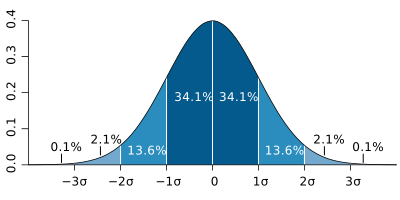
 Let’s start off with a little basic statistics. A “normal distribution” is illustrated in the curve on the left. In a normal distribution whatever is being measured occurs with the characteristic that the mean (average) equals the median (the middle of the distribution of values) equals the mode (the most commonly occurring value in the distribution). Incomes do not occur within a normal distribution. Consequently, average is an extremely poor way to understand incomes.
In a post at the blog of the New York Times Teresa Tritch attempts to explain why even in the face of stagnant incomes for college grads it still makes sense to get a college education:
Graduating from college still means better job prospects. And there are ways to try to buck the wage-stagnation trend, like choosing an in-demand major, though — let’s face it — most people are not cut out to be electrical engineers. College is also valuable for non-economic reasons, including developing one’s intellect and establishing personal, community, institutional and professional ties. It correlates to better health and greater civic engagement throughout one’s life.
I’m much more skeptical than Ms. Tritch. Quite to the contrary, I think that if you exclude the wages of a relative handful of very highly compensated individuals the comparative wage picture of those without college educations and those with college educations looks a lot different. That is what “income inequality” means. Some people get paid a lot more than others.
Here are my predictions for what excluding those wages would do to the income distribution chart. I think it would move the mean income, the median income, and the mode income left. That means that average incomes for college grads would be a lot closer to the average wage of non-grads.
I also think that it makes sense not simply to talk about income but about net income. College grads incur expenses that non-grads don’t. They frequently borrow to pay for their educations and pay interest on those debts—education loans are the fastest-growing form of indebtedness today. Loan repayment reduces net income. Additionally, income over a working life should be taken into account rather than just income. College grads forego years of income and if for most of them the pay they can expect isn’t a great deal more than it would be had they not foregone those years of income, how much economic sense does it actually make?
You won’t find that in Ms. Tritch’s blog post.
The real reason people are pursuing higher education isn’t to increase their average wages. It’s to give them a competitive advantage over people who don’t have a college education. The more people get college educations, the less effective that will be.
And then, of course, there’s the reality that 40% of recent college grads can’t find jobs.