
I also found this observation by Howard Husock and John Tierney at Quillette about city recycling programs interesting:
When recycling programs became common three decades ago, they were sold to taxpayers as a win-win, financially and environmentally: Cities expected to reap budget savings through the sale of recyclable materials, and conscientious taxpayers expected to reduce ecological destruction. Instead, the painful reality for enthusiastic, dutiful recyclers is that most recycling programs don’t make much environmental sense. Often, they don’t make economic sense, either.
The chief buyers of American recyclable materials used to be Asian countries, chiefly China, where wages were low enough to justify labor-intensive recycling operations. But as part of Beijing’s “National Sword†policy, China began banning imports of “foreign trash†in 2017. Other Asian countries also began imposing their own restrictions. Meanwhile, reduced demand sent prices tumbling. The market price for mixed paper, for example, dropped from $160 to $3 per ton from March 2017 to March 2018.
As a result, cities that once collected some revenue for bales of recyclables (though typically not enough to cover the extra costs that recycling introduces into a municipal budget) must now pay to get rid of them. In many cases, they simply send them to landfills.
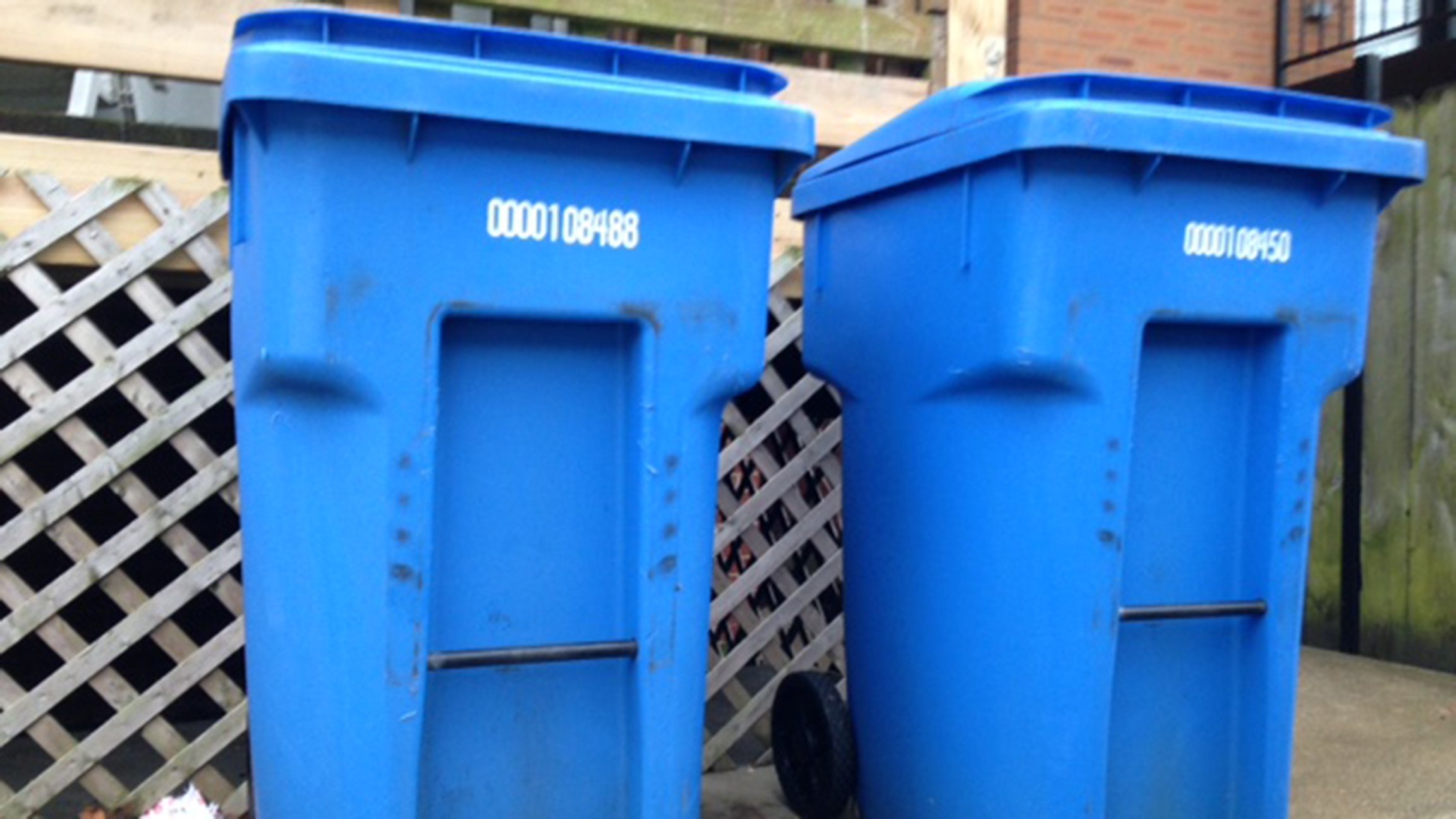
Here in Chicago we residents dutifully put our clean recyclables into blue cans like the ones pictured above and it’s picked up every two weeks by Waste Management who then takes it and puts the contents of six of ten blue cans into a landfill. Waste Management is paid a fee for collection and receives an additional fee for putting what they’ve collected into a WM-owned dump. It’s perfect. Unless, of course, you actually believe the hooey about protecting the environment in which case it’s a scandal and an outrage. How in the heck can such a situation have happened?
The answer, which many people proposing government-based solutions to problems frequently fail to understand, is that government programs have a natural lifecycle. Let’s say arguendo that the lifecycle begins with a need. The more cynical will have other suggestions about the beginning of the process.
Strategies for dealing with the need are proposed and it’s there that things almost immediately begin to go awry. The strategy must be advocated for, sold, and adopted and that very frequently requires some incentives which necessarily are accompanied by undesireable outcomes. Advocacy goes from True Believers to paid advocates to people getting a kickback of some form for specific solutions.
Over time circumstances change. The original need may have evaporated but the program will remain forever because someone, somewhere is making a living from it. Frequently programs transmogrify over time from filling actual needs to employing people at wages higher than they could realize otherwise. The strategy may have failed or become inefficient. In the 13 years since Chicago began its recycling program it has changed from a city-run and operated program to one contracted out to one that was not only contracted out at a cost to Chicago but one that failed to realize the initial objectives. That’s not a long time in the scheme of things.
I guess there’s more than one way of looking at that. One, the minarchist view, is that problems that can’t be solved within the private sector should, by and large, not be solved at all. Another view, one typically held by Democratic policymakers is that you can’t make an omelet without breaking eggs. Somehow the omelets never seem to materialize or are quite short-lived.
My view is somewhat different. Crafting effective policy is hard and there is no such thing as a masterstroke, a “one and done” by which a program may be put into place and left unchanged and unevaluated to run on its own. Programs should all have mandatory, relatively short expiration dates which require them to be reconsidered and retooled on a regular basis.
That’s hard work and outside the wheelhouse of most elected officials.


