The Tax Foundation Discovers Deadweight Loss

In his WSJ column James Freeman mentions the Tax Foundation’s recent assessment of the Biden Administration’s American Jobs Plan:

The White House doesn’t seem to understand that most productivity-enhancing infrastructure is built by business, and when corporate taxes rise, businesses have an incentive to build less of it. The Tax Foundation explains that government spending giveth less investment than the new taxes would taketh away:

We estimate the infrastructure spending would increase long-run GDP by 0.3 percent, but this positive economic effect is entirely offset by the increase in corporate taxation, resulting in less corporate investment which reduces GDP by 0.5 percent in the long run, reduces wages by 0.5 percent, and eliminates 101,000 full-time equivalent jobs.

That’s an example of the deadweight loss I keep harping on.

And they don’t even mention that in order to stimulate the U. S. economy using a Keynesian strategy rather than those of Germany, China, or Japan (or Canada or Mexico) we’d need to produce a lot more of what we consume here. That would make the BANANAs whose support President Biden needs to pass his agenda’s heads explode.

0 comments

A Different Perspective

I agree with the observation that Jason L. Riley makes in his Wall Street Journal column. It’s probably a perspective you haven’t heard if you get most of your information from the NYT, WaPo, CNN, or the Huffington Press:

Mr. Manchin isn’t being obstructionist so much as practical, and he’s forcing Democrats to confront tensions within their ranks that they can’t ignore forever. As more college-educated whites have joined the Democratic Party, it has lurched further left, causing discomfort among the more moderate black, Hispanic, Asian and working-class white Democrats who outnumber them. Unlike these progressive white elites, polling shows that minorities in the main tend to support things like voter-ID laws, school choice, race-blind college admissions and the presence of more police officers in high-crime neighborhoods.

David Shor, a data scientist and Democratic strategist, first voiced these concerns in an interview earlier this year with New York magazine. Democrats have tended to treat racial and ethnic minorities as more progressive by nature, but Mr. Shor said that view was a mistake. “Roughly the same proportion of African-American, Hispanic, and white voters identify as conservative,” he said. “What happened in 2020 is that nonwhite conservatives voted for conservatives at higher rates; they started voting more like white conservatives.” Mr. Shor cited the left’s attacks on law enforcement after the death of George Floyd as an example. “In the summer, following the emergence of ‘defund the police,’ as a nationally salient issue, support for [Joe] Biden among Hispanic voters declined,” he said. “We raised the salience of an ideologically charged issue that millions of nonwhite voters disagreed with us on.”

That’s one of the I believe unappreciated risks of increased immigration. Most of today’s immigrants aren’t progressives. They’re more socially and religiously conservative than the progressive who form the Democratic Congressional leadership. Defunding the police is a lot less interesting to them than reducing the crime in their neighborhoods.

Maybe they’ll become more progressive the longer they’re here. Maybe their children will be more progressive. I wouldn’t bet on it.

1 comment

There’s Nothing Like Getting Elected

The editors of the Wall Street Journal are piling on Illinois Gov. J. B. Pritzker and you’ve got to admit there’s a lot to pile on there:

J.B. Pritzker didn’t say “read my lips” in 2018 when he promised the people of Illinois he wouldn’t sign onto a partisan redistricting if elected Governor. Specifically, he promised to veto any redistricting map “drafted or created by legislators, political party leaders and/or their staffs or allies.” But on Friday he broke that promise, and it will now take its rightful place in the annals of political whoppers beside George H.W. Bush’s famous pledge not to raise taxes.

The new map diminishes the already diminished Republican presence in Springfield. Fourteen Republican-held seats in the state house will be squeezed into seven, for example, guaranteeing a loss of at least seven GOP incumbents. No Democratic incumbents will lose seats as a result of a combined new district. It also redraws the boundaries for the state’s Supreme Court for the first time since 1964—an effort to maintain the 4-3 Democratic majority on what is an elected court.

Adding to the wholly politicized nature of the effort is that redistricting is supposed to be done based on the latest Census results. But because of Covid-19, the results won’t come in time to meet the state constitutional deadline of June 30. The state provides for this—a bipartisan, eight-member commission would then take charge—but Democrats went ahead with less reliable and detailed data.

I didn’t expect him to keep that pledge and I honestly don’t see how anyone could have. There’s nothing like getting elected to change your perspective on electoral reform.

Meanwhile Gov. Pritzker has been musing out loud about spending more time with his family and I don’t know whether that’s a euphemism or not. Were I he I would get out while the getting is good. The Madigan case is just getting into its stride and if he thinks he’ll escape that scot free he’s even dumber than I think he is.

2 comments

The Real Scandal

The editors of the Wall Street Journal are upset over the leak of tax return information to ProPublica that I posted on the other day:

Leaking such information is a crime, since under federal law tax returns are confidential. ProPublica says it received the files from “an anonymous source” and doesn’t know who provided them, how they were obtained, or what the source’s motives are.

Allow us to fill in that last blank. The story arrives amid the Biden Administration’s effort to pass the largest tax increase as a share of the economy since 1968. The main Democratic argument for a tax hike is that the rich should pay their “fair share.” The ProPublica story is a long argument that somehow the rich don’t pay enough. The timing here is no coincidence, comrade.

If I didn’t make it clear in my post I agree with this assessment:

There is no evidence of illegality in the ProPublica story. As these columns keep pointing out, the rich can afford to hire lawyers and accountants to exploit every part of the tax code to pay the minimum amount of income tax the law allows.

ProPublica knows this, so its story tries to invent a scandal by calculating what it calls the “true tax rate” these fellows are paying. This is a phony construct that exists nowhere in the law and compares how much the “wealth” of these individuals increased from 2014 to 2018 compared to how much income tax they paid. ProPublica says that Mr. Buffett’s “true tax rate” over that period was only 0.10%.

But wealth and income are different, and what Americans pay is a tax on income, not wealth. ProPublica makes much of the fact that these billionaires pay a lower rate on capital gains and dividends than they do on income. The story suggests this is unfair, but it isn’t.

The preferential rate for capital gains and dividends has been a central part of the tax code for decades, and for good reasons. Congress has wanted to encourage capital investment; assets are often held for decades and gains are only realized upon their sale; gains can’t be adjusted for inflation over the years they are held; and investors can’t deduct net capital losses from income beyond $3,000 a year. Bipartisan majorities have long supported this part of the tax code.

The real scandal, as I have pointed out time after time, is not the marginal rates that the richest Americans pay or how small their taxes are relative to their wealth. It’s what’s legal under the tax code (not to mention the code’s complexity). Don’t expect that to change. A good part of the Congress’s power derives from granting exemptions to their friends and donors and punishing their enemies and their enemies’ donor via the tax code. It would not be difficult at all to fix but were the Congress to do so they would relinquish that power so it won’t change. Only those who benefit change.

1 comment

Life With a Herding Dog

In a sense this is my “feel good” story of the day it all turned out well. On a state highway in Idaho a border collie mix was “ejected” from the back of a pickup truck in an automobile crash. Here’s a report from KHQ NBC Spokane:

RATHDRUM, Idaho – The Idaho State Police (ISP) is investigation after a crash blocked SH-41 and Hayden Avenue on Sunday afternoon.

ISP said they are looking for people who witnessed the incident.

The crash happened when a GMC Yukon towing a white horse trailer attempted to turn south onto SH-41 when a Buick struck the GMC.

The driver of the Buick, a man from Spirit Lake, was transported to a nearby hospital and was treated and released. No one else was injured.

During the crash, a dog was ejected from the rear of the GMC and is still missing.

That’s exactly why many states prohibit letting dogs ride loose in the backs of pickup trucks. But wait! There’s a happy ending:

Tilly, the 2-year-old Border Collie who was ejected from a car Sunday during a crash, has been found.

He was found on a sheep farm, where he had apparently taken up the role of sheep herder.

According to Tilly’s owner, he has lost some weight since Sunday’s crash and is now drinking lots of water but is otherwise healthy.

And what would you expect him to be doing in sheep country? A border collie, even a mix, has a combination of pack and prey instincts that lead them herd even when no one has asked them to. It’s not just something they like to do, it’s something they need to do. It’s the work for which they were bred.

0 comments

The Four Americas

I think it was one of my favorite humorists, Robert Benchley, who said that there are two kinds of people in the world: those who divide people into two kinds and those who don’t. In a recent piece in The Atlantic George Packer divides Americans into four different camps:

  • Free America
  • Smart America
  • Real America
  • Just America

Here’s his conclusion:

all four of the narratives I’ve described emerged from America’s failure to sustain and enlarge the middle-class democracy of the postwar years. They all respond to real problems. Each offers a value that the others need and lacks ones that the others have. Free America celebrates the energy of the unencumbered individual. Smart America respects intelligence and welcomes change. Real America commits itself to a place and has a sense of limits. Just America demands a confrontation with what the others want to avoid. They rise from a single society, and even in one as polarized as ours they continually shape, absorb, and morph into one another. But their tendency is also to divide us, pitting tribe against tribe. These divisions impoverish each narrative into a cramped and ever more extreme version of itself.

All four narratives are also driven by a competition for status that generates fierce anxiety and resentment. They all anoint winners and losers. In Free America, the winners are the makers, and the losers are the takers who want to drag the rest down in perpetual dependency on a smothering government. In Smart America, the winners are the credentialed meritocrats, and the losers are the poorly educated who want to resist inevitable progress. In Real America, the winners are the hardworking folk of the white Christian heartland, and the losers are treacherous elites and contaminating others who want to destroy the country. In Just America, the winners are the marginalized groups, and the losers are the dominant groups that want to go on dominating.

I don’t much want to live in the republic of any of them.

It’s common these days to hear people talk about sick America, dying America, the end of America. The same kinds of things were said in 1861, in 1893, in 1933, and in 1968. The sickness, the death, is always a moral condition. Maybe this comes from our Puritan heritage. If we are dying, it can’t be from natural causes. It must be a prolonged act of suicide, which is a form of murder.

I don’t think we are dying. We have no choice but to live together—we’re quarantined as fellow citizens. Knowing who we are lets us see what kinds of change are possible. Countries are not social-science experiments. They have organic qualities, some positive, some destructive, that can’t be wished away. Our passion for equality, the individualism it produces, the hustle for money, the love of novelty, the attachment to democracy, the distrust of authority and intellect—these won’t disappear. A way forward that tries to evade or crush them on the road to some free, smart, real, or just utopia will never arrive and instead will run into a strong reaction. But a way forward that tries to make us Equal Americans, all with the same rights and opportunities—the only basis for shared citizenship and self-government—is a road that connects our past and our future.

Meanwhile, we remain trapped in two countries. Each one is split by two narratives—Smart and Just on one side, Free and Real on the other. Neither separation nor conquest is a tenable future. The tensions within each country will persist even as the cold civil war between them rages on.

I found his taxonomy more brittle, more solipsistic, and less factually based than a previous deconstruction of the United States into four groups, Walter Russell Mead’s Jeffersonians, Jacksonians, Wilsonians, and Hamiltonians, on which I’ve written extensively. There’s at least some empirical and historical basis for Mead’s groups. I found Mead’s views more insightful. For example:

Oddly, the most influential libertarians were Europeans, especially the Austrian economist Friedrich Hayek, whose polemic against collectivism, The Road to Serfdom, was a publishing sensation in America in 1944, during the most dramatic mobilization of economic resources by state power in history.

There’s a reason that was the case. The thinker with the most influence on “Free America” wasn’t Hayek but (Russian) Ayn Rand cf. Paul Ryan, Alan Greenspan, Ron and Rand Paul. There’s more of objectivism to it than Reaganism. I suspect the numbers of people who subscribe to “Free America” or “Just America” are actually quite small.

What confuses things is that there’s bit of resonance between Mr. Packer’s taxonomy and Mead’s: “Free America” and Jeffersonians, “Smart America” and Wilsonians, “Real America” and Jacksonians, but not “Just America”. It’s actually rather new and I believe it’s just another term for Marxism substituting race or gender for class. There can be black, white, or Hispanic Jacksonians but there can only be white “Real Americans”. As someone who presumably considers himself part of “Smart America” his description of “Real America” is a lampoon while he cuts “Smart America” altogether too much slack. Note, too, that Mr. Packer is uncomfortable with his “Just America” appellation:

But Just America has a dissonant sound, for in its narrative, justice and America never rhyme. A more accurate name would be Unjust America, in a spirit of attack rather than aspiration.

which makes Mr. Packer’s analysis more comprehensive than it is. And I think his conclusion is entirely too rosy:

We have no choice but to live together—we’re quarantined as fellow citizens. Knowing who we are lets us see what kinds of change are possible. Countries are not social-science experiments. They have organic qualities, some positive, some destructive, that can’t be wished away.

That is factually untrue. The list of countries that no longer exist is enormous. Austro-Hungary, Prussia, the Soviet Union, Yugoslavia. Multi-ethnic, multi-confessional states must maintain a fragile balance. Most nation-states are united by ties of blood. The United States was nearly unique in being, as Chesterton put it a century ago, “a country founded on a creed”. One of Mr. Packer’s factions, “Just America”, rejects that creed as a cruel hoax. Without it I don’t believe there’s anything to keep the United States united.

One word of advice: don’t arouse the Jacksonians. I say this as someone who is not one of them but has lived among them all his life. They are fearsome enemies, merciless, and play by no rules other than victory.

1 comment

A Good Start

NPR reports on Vice President Kamala Harris’s visit to Guatemala:

Vice President Kamala Harris told Guatemala’s president today that the two need to work together to bring hope to his fellow citizens so that they don’t leave and migrate to the U.S. Harris is in Guatemala City on her first foreign trip as vice president. President Biden put her in charge of one of the toughest jobs facing his administration – that is curbing the surge of migrants at the U.S. border. The two leaders held a press conference this afternoon. And we’re joined now by NPR’s Carrie Kahn, who is in Mexico City, where Harris arrives tonight.

I was favorably impressed by this:

VICE PRESIDENT KAMALA HARRIS: Do not come. Do not come. The United States will continue to enforce our laws and secure our border.

I’ll be even more impressed if the Biden Administration follows through with this pledge.

2 comments

The Hypocrisy of the Ultra-Rich

You might find this post at ProPublica interesting. They’ve obtained IRS information on the tax returns of some of the very richest people:

ProPublica has obtained a vast trove of Internal Revenue Service data on the tax returns of thousands of the nation’s wealthiest people, covering more than 15 years. The data provides an unprecedented look inside the financial lives of America’s titans, including Warren Buffett, Bill Gates, Rupert Murdoch and Mark Zuckerberg. It shows not just their income and taxes, but also their investments, stock trades, gambling winnings and even the results of audits.

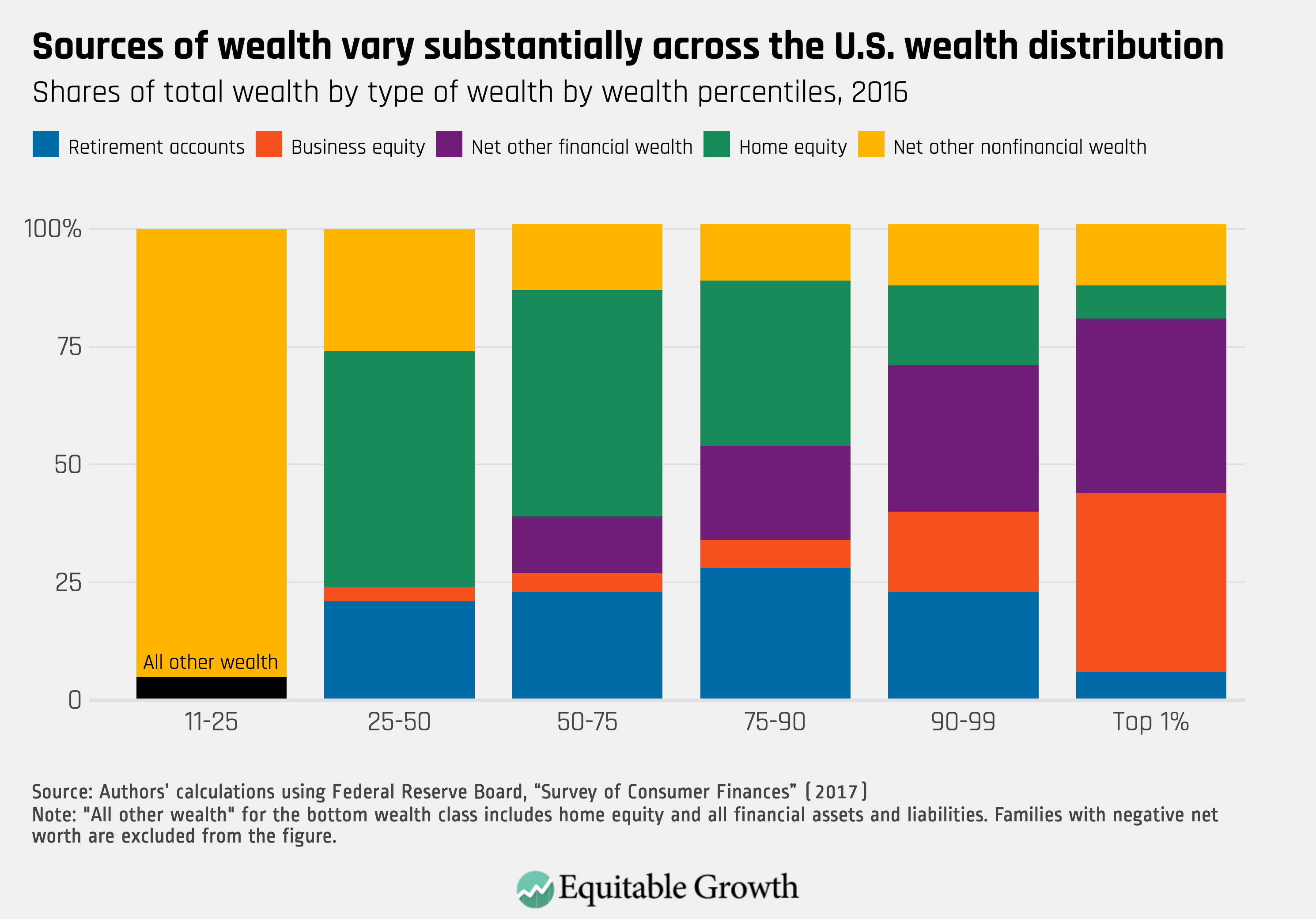
To some degree the post is an exercise in sophistry since they keep switching back and forth between wealth and income which are two different things. Presently, we tax income but we do not tax wealth. Except in one case, of course. A tax is levied on my house based on its assessed value and it’s reassessed every three years. That is, in effect, a wealth tax. It isn’t done that way in all states. In California, for example, you pay real estate taxes based on the value of your house when you bought it. In other words we tax the wealth of the middle class, most of which is held in the form of their homes, but not that of the ultra-rich which is held in other forms.

They do provide a helpful explanation:

In 1916, a woman named Myrtle Macomber received a dividend for her Standard Oil of California shares. She owed taxes, thanks to the new law. The dividend had not come in cash, however. It came in the form of an additional share for every two shares she already held. She paid the taxes and then brought a court challenge: Yes, she’d gotten a bit richer, but she hadn’t received any money. Therefore, she argued, she’d received no “income.”

Four years later, the Supreme Court agreed. In Eisner v. Macomber, the high court ruled that income derived only from proceeds. A person needed to sell an asset — stock, bond or building — and reap some money before it could be taxed.

Since then, the concept that income comes only from proceeds — when gains are “realized” — has been the bedrock of the U.S. tax system. Wages are taxed. Cash dividends are taxed. Gains from selling assets are taxed. But if a taxpayer hasn’t sold anything, there is no income and therefore no tax.

As I noted above there are major differences in the sources of wealth depending on just how wealthy you are:

Warren Buffett has quite publicly declaimed that the rich pay too little in taxes but he has also criticized taxing capital. If that’s not hypocrisy it is, at the very least cognitive dissonance.

Ultimately, the marginal tax rates don’t matter—especially for the very rich. Whether the highest tax rate is 34%, 38%, or 90%, if taxable income is zero the tax is still zero. What matters is how income is determined.

5 comments

When You Eliminate the Impossible

Speaking of articulating arguments in an op-ed in the Wall Street Journal Steven Quay and Richard Muller argue that the science supports the lab-leak hypothesis for the origin of SARS-CoV-2. Here’s the first part of their argument which I don’t find particularly convincing:

Although the double CGG is suppressed naturally, the opposite is true in laboratory work. The insertion sequence of choice is the double CGG. That’s because it is readily available and convenient, and scientists have a great deal of experience inserting it. An additional advantage of the double CGG sequence compared with the other 35 possible choices: It creates a useful beacon that permits the scientists to track the insertion in the laboratory.

Now the damning fact. It was this exact sequence that appears in CoV-2. Proponents of zoonotic origin must explain why the novel coronavirus, when it mutated or recombined, happened to pick its least favorite combination, the double CGG. Why did it replicate the choice the lab’s gain-of-function researchers would have made?

The problem is that unlikely even remarkably improbable things happen all of the time. Here’s the second part of their argument:

There is additional scientific evidence that points to CoV-2’s gain-of-function origin. The most compelling is the dramatic differences in the genetic diversity of CoV-2, compared with the coronaviruses responsible for SARS and MERS.

Both of those were confirmed to have a natural origin; the viruses evolved rapidly as they spread through the human population, until the most contagious forms dominated. Covid-19 didn’t work that way. It appeared in humans already adapted into an extremely contagious version. No serious viral “improvement” took place until a minor variation occurred many months later in England.

Such early optimization is unprecedented, and it suggests a long period of adaptation that predated its public spread. Science knows of only one way that could be achieved: simulated natural evolution, growing the virus on human cells until the optimum is achieved. That is precisely what is done in gain-of-function research. Mice that are genetically modified to have the same coronavirus receptor as humans, called “humanized mice,” are repeatedly exposed to the virus to encourage adaptation.

which I find a lot more convincing. Here’s their conclusion:

The presence of the double CGG sequence is strong evidence of gene splicing, and the absence of diversity in the public outbreak suggests gain-of-function acceleration. The scientific evidence points to the conclusion that the virus was developed in a laboratory.

I’m surprised that they didn’t mention what is to me the more convincing evidence: that in the hundreds of thousands of animal samples tested nothing particularly close to SARS-CoV-2 has been identified. As I’ve pointed out before the similarity between SARS-CoV-2 and the closest bat virus they’ve identified as potential relatives is more like the difference between a human and a cat than it is like the difference between a human and a chimp let alone the genetic similarity between two different humans. Evolution just doesn’t work that way.

2 comments

Are There Actually Shortages?

I’m afraid I couldn’t quite follow the logic of Heidi Shierholz in this New York Times op-ed. It’s not that I don’t understand economics or business or the Bureau of Labor Statstics’s Employment Situation Report. Here’s the meat of what Dr. Shierholz says:

As we sift through the latest jobs report, which showed the economy gained 559,000 jobs in May, three key findings rise to the surface. Bona fide labor shortages are not pervasive. The main problem in the U.S. labor market remains one of labor demand, not labor supply. And unemployment insurance — which many commentators say is keeping workers from returning to work — is bolstering the economy.

After the Great Recession, reports about employers unable to find the workers they needed were pervasive. Everyone from the U.S. Chamber of Commerce to the Obama White House joined in. Growth was slow because workers didn’t have the right skills for the available jobs, the story went.

But they had it completely wrong. At its peak in the Great Recession, the unemployment rate was 10 percent, but it ultimately got down to 3.5 percent — without a hugely expanded national training program to accelerate skills attainment. What actually slowed growth? Insufficient demand for goods and services, which, in turn, meant low demand for workers — not that there weren’t enough qualified workers. It was a labor demand problem, not a labor supply problem.

This is also true today. Wage growth decelerated in May in most sectors. And in a large majority of sectors, wages are growing solidly but not fast enough to raise concern about damaging labor shortages, given that job growth is also strong. Further, we still have 7.6 million fewer jobs than we did before Covid, and there are large employment gaps in virtually all industries and demographic groups. The good news is that unlike in the wake of the Great Recession, today’s labor demand problems are likely to be resolved relatively quickly, thanks to the American Rescue Plan.

While we haven’t seen widespread labor shortages, there is one sector where wage growth points to the possibility of an isolated one: leisure and hospitality. For typical workers in this sector, which includes restaurants, bars, hotels and recreation, the current weekly wage translates into annual earnings of $20,714. With that figure so low, there is little concern recent pay increases will generate broader pressure on wages. In addition, wages in this sector plummeted in the recession and have largely returned to where they’d be if there were no pandemic. And these job reports also take tips into account, which means that wage changes in this sector are most likely driven by the impact of customers returning, en masse, to in-person dining. On top of all this: Rising wages in leisure and hospitality don’t appear to be stymieing job growth, which has been by far the strongest of any sector, contributing three-quarters of the total jobs added in the past two months.

If anything that understates the job losses in the leisure and hospitality sector. At a first approximation that sector shed more jobs than all other sectors combined.

Again, please help me out here. I don’t understand her argument. I’m open to being persuaded but I need to understand how she arrives at her conclusion. I understand the conclusion itself.

2 comments
